
Being bigender means identifying with two genders, either at the same time or shifting between them. Those genders can be male and female, but they can also include nonbinary identities such as agender, demigirl, demiboy, genderfluid, or another combination.
The concrete reality is that bigender people experience gender as something dual, not fixed in one category but expressed through two identities that both feel real, valid, and central to who they are.
It is not a phase, a trend, or confusion; it is a genuine lived experience of gender that exists across cultures, histories, and communities.
Bigender identity sits under the wider nonbinary and genderqueer umbrellas, yet it is distinct because of the dual experience. Some bigender people feel both genders simultaneously in a blended or layered way.
Others shift between them based on mood, expression, environment, or inner state. Neither version is more “correct”; both reflect authentic ways of experiencing gender.
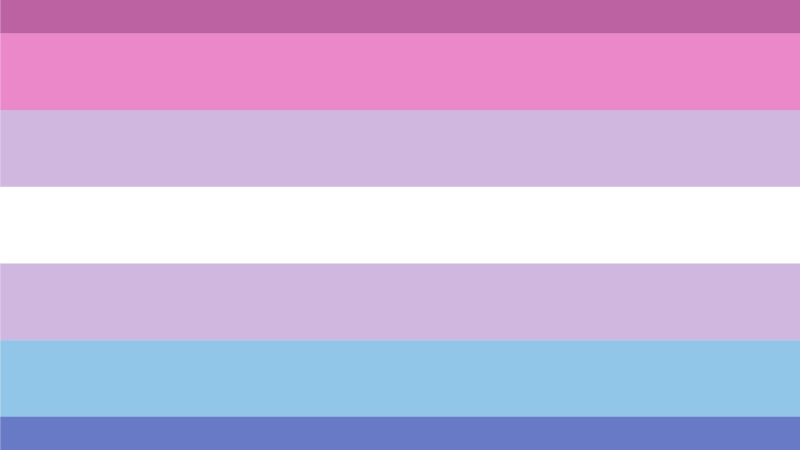
The bigender pride flag, created to represent this identity, uses distinct colors to express the balance, transition, and coexistence of multiple genders.
What Bigender Actually Means: A Dual Gender Identity
Bigender is part of the broader landscape of gender diversity. The core idea is simple: a person feels connected to two genders. These genders may be:
- simultaneous
- alternating
- overlapping
- balanced
- shifting depending on circumstances
For some bigender individuals, both genders remain present at all times, like a blend. For others, one gender identity becomes dominant depending on the moment, emotion, or context.
Gender may shift daily, monthly, or unpredictably. Yet the “two-ness” remains the consistent foundation.
Bigender is not the same as being genderfluid, although some bigender people also identify as fluid. Genderfluidity typically involves movement across many possible genders.
Bigender is specifically about two.
The experience is internal, psychological, emotional, and sometimes physical in terms of expression. It has nothing to do with sexuality, clothing preference, or personality traits.
Bigender people may look masculine, feminine, androgynous, or anywhere between these expressions, and none of these aesthetics defines the validity of the identity.
How Bigender Differs From Similar Identities
Many gender identities overlap in experience or structure, but bigender holds clear distinctions. Understanding those differences helps avoid misunderstandings and reinforces that gender is multidimensional, not binary.
Bigender vs. Genderfluid
Genderfluid people shift between multiple genders over time. Bigender people shift between exactly two or feel two simultaneously.
Fluidity might be part of their experience, but the “dual” aspect is the anchor.
Bigender vs. Nonbinary
Bigender sits within the nonbinary umbrella because it doesn’t fit a single binary category. However, a bigender person may include binary genders (e.g., male + female).
They are nonbinary because they do not experience gender in a single binary way.
Bigender vs. Agender
Agender refers to having no gender. Bigender may include agender as one of the two identities, but it contrasts strongly because bigender involves multiple genders rather than the absence of one.
Bigender vs. Androgynous Presentation
Androgyny is visual. Bigender is internal. Some bigender people present androgynously, others shift appearance depending on their gender state, and others don’t change presentation at all.
Bigender identity is not defined by how someone looks; it is defined by how they experience themselves.
How Bigender People Experience and Express Their Identity
View this post on Instagram
No two bigender individuals experience their identity the same way. Some feel stable duality where both genders remain present constantly. Others shift between genders in cycles or phases.
Some express their identity externally by changing clothing styles, pronouns, hairstyles, or names depending on what gender they feel at that time.
Others maintain a consistent external appearance while their internal gender identity changes or coexists. Both are equally valid.
Expression is personal. For some, leaning into masculine or feminine fashion may help them feel aligned with the gender they embody at that moment.
For others, expression does not change; their gender experience is purely internal and not tied to style or presentation.
Pronouns may also shift. A bigender person might use he/she, they/he, she/they, or any combination that reflects the dual identity. Some alternate based on gender shifts; others choose pronouns that encompass both identities simultaneously.
The Bigender Pride Flag: Colors and Meaning
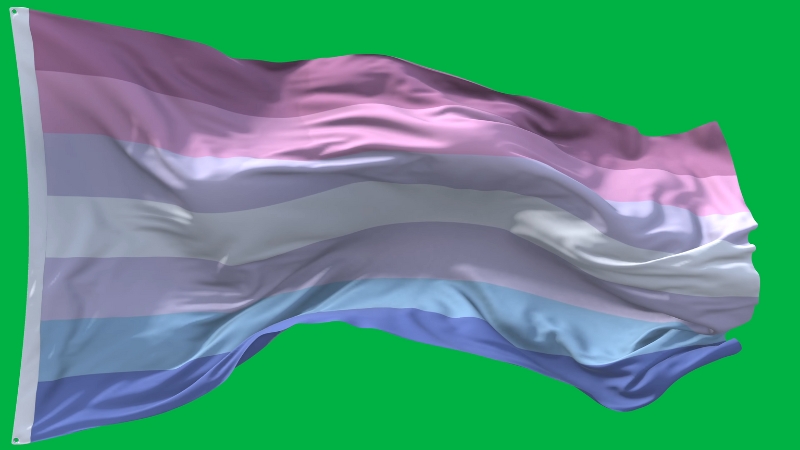
The bigender pride flag is composed of layered horizontal stripes, each color representing a specific aspect of the identity. While variations exist, the most widely recognized bigender flag includes:
Color
Meaning
Pink
Womanhood, femininity, or feminine-aligned gender
Light Pink
Variant forms of femininity or fluid feminine energy
Purple
Overlap between identities, blending, mixed gender experience
Light Blue
Variant forms of masculinity or soft masculine expression
Blue
Manhood, masculinity, or masculine-aligned gender
The flag visually represents the coexistence or shifting between two genders. The blending purple stripe highlights the space where these identities overlap, intersect, or coexist.
It symbolizes that gender is not always sharply divided but can be layered, fluid, or harmonious.
Some versions also include white stripes symbolizing nonbinary experiences or neutrality, depending on the design. But the core message remains: the bigender flag expresses the dual, interconnected nature of the identity.
Bigender Identity in Culture, Community, and Language
The concept of multiple genders is not new. Cultures around the world, such as Indigenous North American nations, South Asian communities recognizing Hijra and other identities, and Polynesian Fa’afafine, have acknowledged gender experiences that exist outside singular categories.
While these identities are not identical to “bigender,” they illustrate that gender diversity is historically and culturally rooted, not a modern invention.
In LGBTQ+ communities, bigender people often navigate unique conversations about pronouns, expression, and recognition. Some face invalidation if they do not outwardly change their appearance depending on their gender state.
Others face pressure to “pick one gender,” misunderstanding the legitimacy of dual identity.
Language continues to evolve. Some bigender individuals create new terminology or use existing nonbinary language to express themselves more fully. What remains consistent is that bigender identity is real, personal, and valid, regardless of external perception.
Common Misconceptions About Being Bigender
Many misconceptions arise from a limited cultural understanding of gender. These misunderstandings often lead to stereotypes, dismissal, or confusion.
A few recurring myths include the idea that bigender people are simply indecisive, are experimenting with gender expression, or are describing personality traits rather than a genuine identity. None of these assumptions reflects the real experience of bigender individuals.
Another misconception is the belief that bigender identity requires constant switching or visible gender changes. In reality, many bigender people feel both genders simultaneously without visible shifts. Their experience is subjective and internal, not performative.
It’s also incorrect to assume that being bigender relates to sexuality. Sexual orientation and gender identity are entirely separate. A bigender person can be straight, gay, bi, pan, ace, or anything else.
All these misconceptions overlook the complexity of gender experience and the nuance within the nonbinary spectrum.
Pronouns, Names, and Expression: Flexibility and Self-Definition
Pronouns are an important part of bigender expression, but vary widely. Some use one pronoun set consistently; others switch depending on how they feel.
Switching pronouns should never be interpreted as inconsistent; it reflects authentic gender shifts.
Names can also differ. Some bigender individuals use two names, one aligned with each gender, while others use a single name that represents their full identity.
Expression may include changes in clothing, makeup, posture, or communication style, though none of these are required.
Identity disclosure is personal. Many bigender people share their identity selectively, choosing safe or supportive environments. Others are fully open.
The range of expression is broad, and no single experience defines the label.
How to Support Someone Who Is Bigender
Supporting a bigender person is simple: listen, respect, and acknowledge their identity. Using the pronouns they request, avoiding assumptions about their gender expression, and validating their experiences help create an affirming environment.
Support also means understanding that gender may shift for them. If they express discomfort, need adjustment in pronouns, or want space to explore, respecting that process reinforces safety and trust.
It is important to avoid imposing expectations on how they should dress, behave, or present. Gender identity is internal; expression is personal and can vary by comfort, context, and identity state.
Conclusion
@zoestoller Let’s talk about the label bigender! 💗💜🤍💜💙 Bigender is an LGBTQ+ identity that describes someone who experiences two genders. This can consist of any two genders — including binary genders (i.e. man or woman), as well as any genders on the non-binary spectrum. As with all identities, every bigender experience is completely unique. For example… ▫️ Some bigender people experience both genders at once, while for others, their sense of gender might shift between the two — and some people relate to both of these scenarios. ▫️ Some bigender people identify with the labels transgender and/or non-binary (as the label bigender technically falls within these umbrellas), while others don’t. Either way is okay! ▫️ Some bigender people change their name, pronouns, and/or how they express themselves based on their shifting gender, but this is not a requirement to be valid in this identity. If you’re exploring whether bigender might be the label for you, here are some signs you might relate to ⤵️ 💗 you have trouble categorizing your gender experience into just one label 💜 you notice that your sense of gender changes over time 🤍 your gender identity feels more expansive than what you were taught by society 💜 you can relate when you hear about other bigender people’s experiences 💙 your sense of gender feels connected to two different identities 💗 you simply connect to the label bigender 👋🏻 But it’s also important to remember… … that these are just *some* of the signs that you might be bigender. Even if have different experiences from these, you are still valid in your identity! And the only person with any say in who you are, and what labels you use, is YOU 🥰 💬 How would you describe your gender experience? Do you connect to the label bigender? 💬 #zoestoller #bigenderpride #genderidentity #transnonbinary🏳️⚧️ #lgbtqsigns #gendersigns ♬ Flowers – Miley Cyrus
Being bigender means living with two genders, sometimes simultaneously, sometimes shifting between them, always authentically. It is part of the rich diversity of human gender experience.
The bigender pride flag symbolizes this duality with colors that represent masculine, feminine, and blended identity.
Bigender people navigate unique experiences, misconceptions, and evolving language, but their identity remains a valid and deeply personal part of who they are.