
As LGBTQIA+ terminology continues to grow, new words emerge to capture experiences that many people have felt but couldn’t name. One such term is cassgender — a gender identity rooted in the simple feeling that gender just doesn’t matter much.
The True Meaning of Cassgender
View this post on Instagram
The cassgender definition describes someone who may have a gender identity but feels indifferent toward it. These individuals don’t see gender as a meaningful part of who they are. It’s not that they lack a gender entirely. Instead, they just don’t place weight on it.
This idea of gender indifference sets cassgender apart in the growing landscape of nonbinary identities. While many people explore and celebrate their gender, cassgender individuals take a different path. They may shrug at the question altogether. For them, gender categories hold little personal value — even as more labels become available.
In a world where identity conversations are more visible than ever, cassgender offers a quiet but important perspective. It gives language to those who feel that the entire concept of labeling their gender is unnecessary. It’s a valid space within the broader spectrum of gender identity that deserves recognition and understanding.
Core Concept
A cassgender person feels that gender has no meaningful impact on their life, personality, or self-image. They might technically have a gender, but they treat it as a background detail. Think of it like eye color — it exists, but it doesn’t shape how they move through the world. This form of gender apathy is the defining trait of the identity.
How Cassgender Differs from Other Gender Identities
Cassgender is often confused with agender, but the two are not the same. The comparison below highlights the differences within nonbinary terminology:
| Identity | Has a Gender? | Relationship to Gender |
|---|---|---|
| Cassgender | Possibly yes | Views gender as unimportant |
| Agender | No | Experiences no gender at all |
| Genderfluid | Yes, shifting | Gender changes over time |
A person can be cassgender alongside another identity. For example, someone might identify as a demigirl yet feel that label carries no weight in their daily life.
The Experience of Gender Indifference
People who experience gender apathy often describe it through simple statements:
- They don’t care how others perceive their gender expression.
- They feel no attachment to being seen as masculine, feminine, or anything in between.
- Questions about gender feel pointless or confusing to them.
This indifference doesn’t mean discomfort. It means gender expression and labels hold little personal significance. For cassgender individuals, gender is simply not a driving force in their sense of self — and that experience is completely valid within the broader gender identity spectrum.
History and Origin of the Term
Every identity label has a starting point. The cassgender history traces back to a specific moment on a specific platform.
Creation by Tumblr User Okaygender
The term cassgender was coined by the okaygender tumblr account through the MOGAI archive blog on September 28, 2014. Tumblr served as a major hub for gender identity discussions during this period. The MOGAI archive acted as a catalog for new identity terms, giving users a centralized space to propose and define labels.
No verified records show that a term with the same meaning existed before this date. It is possible earlier discussions touched on the concept, but the formal coining is credited to this Tumblr post.
Timeline of Term Development
| Date | Event | Platform |
|---|---|---|
| September 28, 2014 | Term cassgender first coined | Tumblr (MOGAI Archive) |
| Late 2014 | Early adoption among MOGAI community members | Tumblr, social media |
| 2015–2017 | Spread to gender identity wikis and educational resources | Various online platforms |
| 2018–Present | Recognized in broader gender terminology evolution discussions | Wikis, forums, social media |
The 2014 gender terms era saw a wave of new identity labels emerge on Tumblr. Cassgender was one of many, but it stood out because of its unique focus on indifference rather than description.
Why the Term Was Created
The gender terminology evolution of the early 2010s brought hundreds of new labels. Creating fitting categories helped people describe their experiences with precision. Yet not everyone placed the same weight on these labels.
The term was coined as a reminder: each person gets to decide how important gender identity is to them. Some people simply don’t find gender categories meaningful in their daily lives. Cassgender gave those individuals a word to express that feeling. Before exploring its linguistic roots, it’s worth noting how this simple idea filled a real gap in the conversation.
Etymology and Linguistic Breakdown
Having a deeper knowledge regarding the cassgender etymology starts with breaking the word into two parts. The term combines “cass” with “gender” to form a single, descriptive identity label. This word origin traces back to the English verb “cass,” which means “to render null and void,” “to annul,” or “to reject.”
The cass meaning is key to grasping what this identity represents. When someone identifies as cassgender, they are saying that gender has been rendered void in their personal experience. The linguistic construction is intentional. It captures the act of dismissing or nullifying gender’s role in how a person sees themselves.
| Component | Origin | Meaning | Role in the Term |
|---|---|---|---|
| Cass | English verb (archaic/legal) | To render null and void; to annul; to reject | Describes the action of voiding gender’s importance |
| Gender | Latin “genus” (kind, type) | A person’s sense of identity related to masculinity, femininity, or other categories | Identifies what is being rendered void |
| Cassgender (combined) | Modern English coinage (2014, Tumblr) | An identity where gender is considered unimportant or irrelevant | Full identity label used in gender terminology |
The word origin of “cass” appears in older legal and formal English texts. Its use in this modern context gives the term a precise, almost declarative quality. By choosing this root, the term’s creator ensured that the label itself communicates a clear message: gender is not a defining factor for the person using it.
This careful approach to naming connects directly to the visual symbols and flags that represent the cassgender community, explored in the next section.
Cassgender Flags and Visual Representation
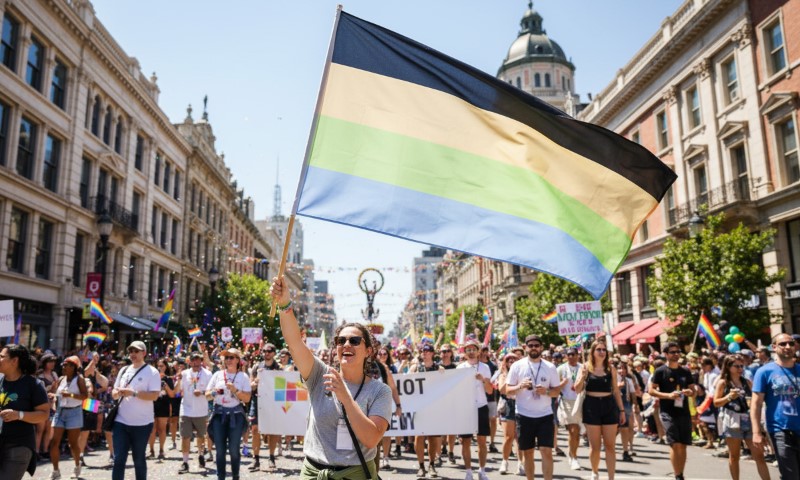
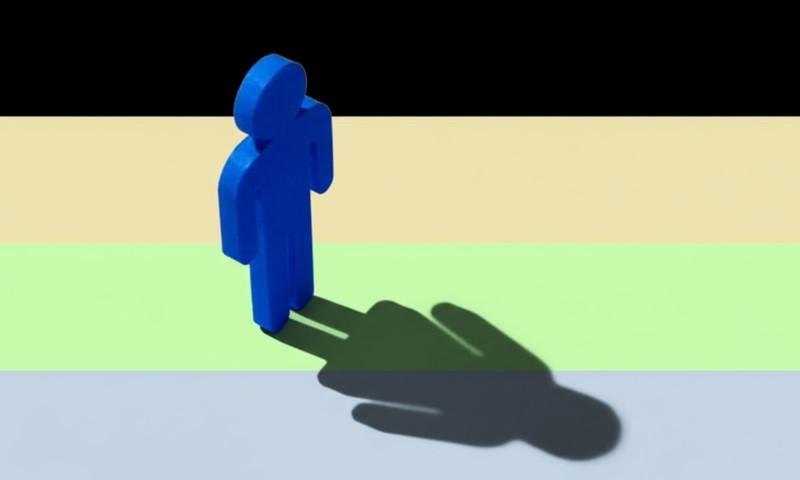
Like many LGBTQ symbols, the cassgender identity has its own pride flag design that gives it a distinct visual representation within the broader community. Several versions of the cassgender flag exist today, each created by different artists across online platforms.
Original Flag Design by Pride-Flags-For-Us
The original cassgender flag was created by the Tumblr user pride-flags-for-us. It was first publicly recorded on February 27, 2015, though it may have been designed earlier. On June 10, 2015, the Tumblr blog pride-flags offered a clarification of the flag colors meaning and their connection to the cassgender identity.
Alternative Flag Variations
As with many pride flag design traditions, alternative versions have appeared over time. On March 24, 2021, a new variation was posted to DeviantArt by the user Pride-Flags. The symbolism behind this version remains undocumented.
A separate alternative was created by FANDOM user Neptunianfluxi.rian on an unspecified date. Its color meanings are not officially recorded either. Most alternative designs rearrange the original colored stripes into new patterns.
Symbolism and Color Meanings
The flag colors meaning in the original cassgender flag reflects the core of the identity itself. Here is a breakdown of the key elements:
| Color | Symbolism |
|---|---|
| Green | Represents nonbinary identity and gender outside the binary |
| Slate | Represents apathy or indifference toward gender |
| Tan | Represents apathy and neutrality regarding gender labels |
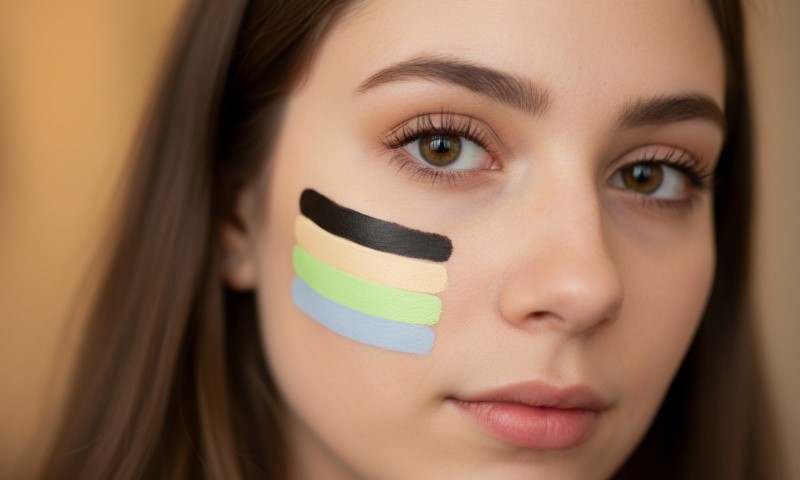
This visual representation captures the essence of cassgender experience — a sense that gender simply does not matter. As one of the more understated LGBTQ symbols, the cassgender flag communicates quiet neutrality rather than bold assertion. Its muted tones set it apart from many other pride flag design styles that use vibrant, high-contrast palettes.
Pronouns and Language Preferences
Cassgender pronouns start with one key fact: there is no single “correct” set. Since cassgender people do not place high importance on gender, their pronoun preferences can range widely. Some accept any pronoun. Others stick with pronouns tied to their assigned gender. The best path forward is always to ask.
Individual Pronoun Choices
Being cassgender does not mean a person lacks gender entirely. It means gender holds little weight in how they see themselves. Many cassgender people still have a gender identity and may want others to use matching pronouns. A cassgender woman, for example, might prefer she/her — not because gender defines her personality, but because those pronouns feel accurate.
Others embrace gender neutral language and feel comfortable with they/them or neopronouns. Some have no preference at all and welcome any pronoun. This range makes inclusive language essential when speaking with or about cassgender individuals.
- Significant other
- Partner
- Joyfriend
- Enbyfriend
Respectful Communication
Respectful communication means never assuming someone’s pronouns based on appearance. A simple “What are your pronouns?” goes a long way. This small step shows genuine care and supports inclusive language in everyday life.
| Scenario | Recommended Approach | Why It Matters |
|---|---|---|
| Meeting someone new | Ask their pronoun preferences directly | Avoids assumptions and shows respect |
| Unsure which pronouns to use | Default to they/them until informed | Uses gender neutral language as a safe starting point |
| Someone says “any pronouns are fine” | Rotate or use what feels natural | Honors their stated comfort level |
| Choosing a relationship title | Ask which term they prefer | Supports respectful communication and personal identity |
Practicing these habits builds spaces where cassgender pronouns — and all pronoun preferences — are treated with dignity.
Identifying as Cassgender & Self-Discovery Questions
The path to cassgender identification often begins with a simple question: “Does my gender matter to me?” This kind of personal reflection can feel both freeing and unfamiliar. There is no test or checklist that confirms any gender identity. But certain questions can guide the process of identity exploration in a meaningful way.
For those engaged in gender questioning, the following prompts can help bring clarity:
- Is my gender important to how I see myself?
- Does gender shape the way I experience daily life?
- Do I care how others perceive my gender?
- Does being labeled a specific gender cause me discomfort — or do I feel nothing about it at all?
- Would I be content if gender categories didn’t exist?
Answering “no” to one or more of these questions during self-discovery may point toward a cassgender identity. Not every person will answer the same way. Some people feel gender is irrelevant yet still prefer specific pronouns. That experience is just as valid.
It’s worth noting that cassgender identification can coexist with other gender labels. A person might identify as nonbinary or female while viewing gender as unimportant. The related term “cassflux” describes those whose level of gender indifference shifts over time, adding another layer to identity exploration.
| Self-Discovery Question | Cassgender Response | Non-Cassgender Response |
|---|---|---|
| Is gender important to my identity? | No, it holds little or no significance | Yes, it plays a key role in who I am |
| Do I care how others see my gender? | Not really — it doesn’t affect me | Yes, I want others to see me accurately |
| Does gender shape my daily experiences? | I don’t notice or think about it | It influences many parts of my life |
| Can I hold another gender identity at the same time? | Yes, cassgender can overlap with others | My gender identity stands on its own |
Personal reflection is a deeply individual process. There is no rush to reach a conclusion. Gender questioning at any stage of life is natural and healthy. What matters most is that each person finds language that feels true to their experience.
Supporting Cassgender Individuals
@s3xtheorywithdee Cassgender anyone? ✨⭐️💖🌈 #cassgender #cassgenderpride #casspronouns #theythem #queer #enby #nonbinary #genderqueer #genderfluid #lgbt #genderdiverse #lgbtiaplus #sexuality #genderneutral #trans #lgbtq #segged
Supporting cassgender people starts with a simple idea: take their identity seriously. Gender indifference is not an invitation to joke about gender or dismiss it. True allyship means treating every gender conversation with equal weight and care.
Respectful Communication Practices
Respectful interaction with cassgender individuals involves a few key steps:
- Ask about their preferred pronouns instead of assuming.
- Use the language they choose for themselves.
- Avoid pressing them to explain or justify their identity.
- Listen without trying to “fix” or redefine their experience.
Gender indifference does not mean a person lacks feelings about how others treat them. They still deserve the same dignity given to anyone sharing their identity.
Common Misconceptions to Avoid
Many people confuse cassgender identity with apathy or a lack of self-awareness. This misunderstanding can be harmful. Below is a quick breakdown of myths versus reality:
| Misconception | Reality |
|---|---|
| Cassgender people don’t care about anything gender-related | They may care about pronouns and respect—gender category just holds low importance to them |
| It’s just a phase or confusion | It is a distinct, valid identity within the LGBTQ support community |
| They must be nonbinary | Cassgender can apply to any assigned gender; it describes attitude, not category |
Creating Inclusive Spaces
Inclusive practices in schools, workplaces, and social groups make a real difference. Organizations can normalize sharing pronouns without forcing disclosure. They can train staff on lesser-known identities so no one feels invisible.
LGBTQ support networks that acknowledge cassgender experiences send a powerful message: every relationship with gender matters. When people feel seen, trust grows—and that is the foundation of genuine allyship.
FAQ
The Bottom Line
In this cassgender summary, the key takeaway is clear: some people simply do not see gender as a defining part of who they are. The term was coined in 2014 to fill a gap in the way people talk about their relationship with gender. It gives a name to a real experience that many individuals share but may struggle to describe.
Gender identity understanding grows when people learn about identities like cassgender. This label sits within the broader gender spectrum, reminding us that people connect with gender in very different ways. Some feel deeply tied to their gender, while others feel neutral or indifferent. Both experiences are equally valid.
LGBTQIA+ awareness depends on recognizing the full range of identities that exist. Using inclusive terminology helps build spaces where everyone feels seen and respected. When communities embrace terms like cassgender, they send a strong message that all ways of experiencing gender matter.
Learning about the gender spectrum is an ongoing process. Taking time to understand cassgender and related identities helps people become better allies, friends, and community members. Every step toward knowledge is a step toward a more accepting world.